
Sarnath Buddhist Temple , Sarnath , Varanasi

81 people are viewing this place right now

Address - Sarnath Sta Rd, Pandeypur, Sarnath, Varanasi, Uttar Pradesh 221007

🕒open - 6:00 am

🕙Closed - 6:00 pm

🔖No Entry Ticket Required

🔖No Entry Ticket Required

Summary

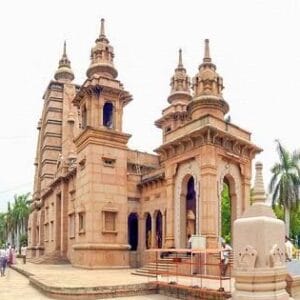
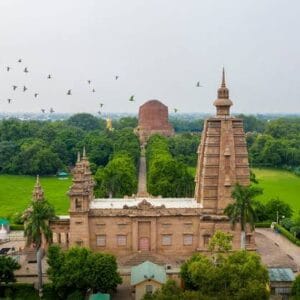
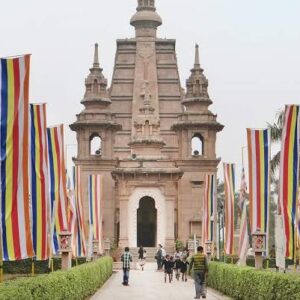
Sarnath Buddhist Temple in Varanasi marks the site where Lord Buddha delivered his first sermon, initiating Buddhism. Surrounded by tranquil gardens, the temple features a serene Buddha statue, murals of his life, and international architectural influences. It’s a sacred site for meditation, prayers, and exploring Buddhist heritage.

Location

  • Sarnath Sta Rd, Pandeypur, Sarnath, Varanasi, Uttar Pradesh 221007

Full Story

The Sarnath Buddhist Temple is a revered site located in the sacred town of Sarnath, near Varanasi, Uttar Pradesh. This temple is part of the spiritual and historical complex of Sarnath, where Lord Buddha delivered his first sermon after attaining enlightenment, marking the beginning of Buddhism.


1. Early Buddhist Period (6th Century BCE – 3rd Century BCE)

  • Buddha’s First Sermon: In 528 BCE, Gautama Buddha gave his first teaching, known as the Dhammachakkappavattana Sutta (Turning the Wheel of Dharma), to his five disciples at the Deer Park (Mriga Dava) in Sarnath.

  • This sermon explained the Four Noble Truths and the Eightfold Path, which became the foundation of Buddhism.

  • Sarnath thus became one of the four holiest Buddhist pilgrimage sites along with Lumbini, Bodh Gaya, and Kushinagar.


2. Mauryan Patronage – Emperor Ashoka (3rd Century BCE)

  • Emperor Ashoka the Great, after embracing Buddhism, visited Sarnath around 249 BCE.

  • He built the famous Dhamek Stupa, which still stands as a major attraction.

  • Ashoka erected several pillars with inscriptions to spread Buddhist teachings. The most famous among them is the Ashokan Pillar with the Lion Capital, which later became the National Emblem of India.

  • Under Ashoka, Sarnath flourished as a center of Buddhist learning and pilgrimage.


3. Gupta Period – The Golden Age of Sarnath (4th–6th Century CE)

  • During the Gupta dynasty, Sarnath reached its artistic peak.

  • The Dhamek Stupa and Chaukhandi Stupa were expanded and decorated.

  • Exquisite Buddha statues in Dharmachakra Pravartan Mudra (Teaching Gesture) were created, showcasing the classical Gupta art style.

  • Numerous monasteries, shrines, and educational centers made Sarnath a hub of Buddhist philosophy and art.


4. Decline and Destruction (12th Century CE)

    • In the 12th century, Sarnath suffered massive destruction during invasions by Turkic rulers.

    • Monasteries were burnt, stupas were damaged, and Buddhist monks fled from the region.

    • This marked the decline of Buddhism in northern India, including Sarnath.


5. Rediscovery and Archaeological Excavations (19th Century CE)

  • Sarnath was rediscovered during the 19th century by British archaeologists such as Alexander Cunningham.

  • Excavations revealed the remains of stupas, monasteries, sculptures, and inscriptions.

  • Many important artifacts, including the Lion Capital, were found and are now preserved in the Sarnath Archaeological Museum.


6. Modern Buddhist Temples at Sarnath (20th Century – Present)

  • Today, Sarnath is home to numerous Buddhist temples and monasteries built by different countries, showcasing global Buddhist traditions:

    • Mulagandha Kuti Vihar – built by the Maha Bodhi Society in the 20th century, houses frescoes by Japanese artist Kosetsu Nosu.

    • Thai, Burmese, Tibetan, Japanese, and Korean temples reflect international Buddhist devotion.

  • The site continues to attract monks, scholars, and pilgrims from across the world.

  • Annual celebrations of Buddha Purnima are held here with great reverence.


7. Architectural Features

  1. Buddha Statue:
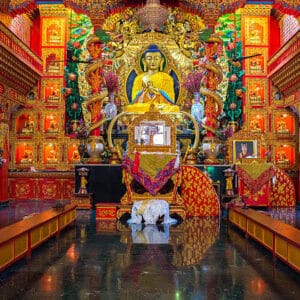
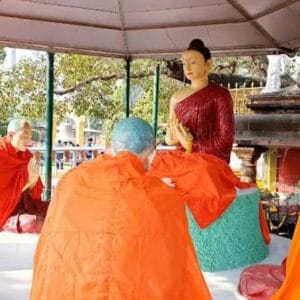
    • The temple houses a serene statue of Lord Buddha in Dharmachakra Mudra (teaching posture), symbolizing the turning of the Wheel of Dharma.
  2. Murals and Artwork:
    • The interiors are adorned with vibrant murals depicting key events from Buddha’s life, including his enlightenment and first sermon.
  3. Surroundings:
    • The temple is surrounded by a tranquil garden, creating a peaceful environment ideal for meditation and reflection.
  4. International Influence:
    • The architectural style is inspired by various Buddhist traditions, blending Indian and international influences, such as Thai, Japanese, and Tibetan styles.

Conclusion: The Legacy of Sarnath

The Buddhist temples of Sarnath, Varanasi, represent more than just monuments – they are the living heritage of Lord Buddha’s teachings. From the first sermon at the Deer Park to the Mauryan and Gupta patronage, and from medieval decline to modern revival, Sarnath remains one of the most important symbols of Buddhist philosophy. Today, with its stupas, Ashokan pillar, international temples, and archaeological remains, Sarnath stands as a spiritual beacon for peace, wisdom, and enlightenment.
Opening time
  • Morning: Approximately 4:30 AM or 6:00 AM to 11:00 AM or 11:30 AM
  • Afternoon: Approximately 1:30 PM to 5:30 PM or 6:00 PM
Best time to visitEarly Morning & Early Evening
Best day to visitWeekends (Saturday and Sunday)
Best month/season to visitOctober to March (Winter) , Buddha Purnima (usually in May) and Other Buddhist Observances
National Emergency Number( sos )112
Place helping / contact no.Tourism Department of Uttar Pradesh

Contact No.: +91 522 223 5025

Significance
  • Represent diverse Buddhist traditions (Sri Lankan, Thai, Japanese, etc.).
  • Are active centers of worship and practice.
  • Preserve Buddhist art and culture.
  • Provide spaces for pilgrimage and reflection.
  • Serve as centers of learning and community.
Type of PlaceReligious Site, Tourist Attraction , Historical Sites , Temple Complex, Mythological Site, Cultural and Park
Built ByThe Sarnath Buddhist Temple was built by the Mahabodhi Society of India, with contributions from various international Buddhist communities. It reflects influences from different Buddhist cultures, including Thai, Tibetan, and Japanese styles, symbolizing global unity in Buddhism and honoring the sacred site of Lord Buddha’s first sermon.
Year of Constructionearly 1930 to 1931
Public washroomAvailable nearby
Canteen / RestaurantThere are many street food stalls nearby
Parkingnearby
Busiest dayWeekends (Sundays), Holidays and Public Holidays , Buddha Purnima & Other Buddhist Observances
Local languageHindi
Nearby accommodationAvailable
Spread over areaapproximately 12 acres.

Entry to these temples is generally free. There is no ticket fee to enter and offer prayers.

Things to Do

  1. Meditate and Pray:
    • Participate in meditation sessions to experience spiritual calmness.
  2. Explore the History:
    • Learn about the life of Buddha through murals, guided tours, and historical exhibits.
  3. Attend Ceremonies:
    • Witness Buddhist rituals and festivals like Buddha Purnima, celebrated with great devotion.
  4. Connect with Nature:
    • Stroll through the peaceful gardens surrounding the temple.

Travel Tips

  1. Best Time to Visit:
    • October to March is the most comfortable period for a visit.
    • Special celebrations occur during Buddha Purnima (April/May).
  2. What to Wear:
    • Modest and comfortable attire is recommended, respecting the spiritual atmosphere.
  3. Facilities:
    • Restrooms, a small library, and meditation halls are available for visitors.
  4. Etiquette:
    • Remove footwear before entering the temple and maintain silence to respect the sanctity.

How to Reach

  1. By Air:
    • The nearest airport is Lal Bahadur Shastri International Airport, Varanasi, about 24 km away.
  2. By Train:
    • The nearest railhead is Varanasi Junction, 10 km from the temple.
  3. By Road:
    • Sarnath is well-connected via road, with taxis, autos, and buses available from Varanasi.

1. Minimum Traveling Budget 

If you’re traveling on a budget-friendly trip to Sarnath from Varanasi or nearby cities, here’s an estimated breakdown of the costs:

Expense CategoryEstimated Cost (INR)
Transport (Local/Train/Bus)₹50 – ₹300
Budget Accommodation (Dorms/Lodges)₹300 – ₹800
Food (Street/Local Dhabas)₹150 – ₹400 per day
Entry Fees (Sarnath Museum, Stupas, etc.)₹25 – ₹50
Local Transport (Rickshaw, Auto)₹50 – ₹200
Miscellaneous (Water, Small Shopping, etc.)₹100 – ₹300
Total Budget Estimate (1 Day for 1 person)₹700 – ₹2,000

This budget includes basic transportation, entry fees, food, and accommodation


2. Medium Traveling Budget 

For a comfortable yet affordable travel experience, here’s an estimate for a one-day visit:

Expense CategoryEstimated Cost (INR)
Transport (Taxi/Train/Bus)₹300 – ₹800
Accommodation (3-Star Hotel/Guesthouse)₹1,000 – ₹2,500
Food (Restaurant & Café Meals)₹500 – ₹1,200
Entry Fees (Sarnath Museum, Stupas, etc.)₹50 – ₹100
Local Transport (Auto/Taxi Rental)₹300 – ₹800
Miscellaneous (Souvenirs, Guide, Snacks, etc.)₹300 – ₹1,000
Total Budget Estimate(1 Day for 1 person)₹2,500 – ₹6,400

This budget is ideal for travelers looking for a comfortable stay, good food, and better transport options while exploring Sarnath


3. Large Traveling Budget 

For those seeking a luxurious and comfortable experience, here’s an estimate for a one-day visit:

Expense CategoryEstimated Cost (INR)
Transport (Private Car, Flight, Premium Train)₹1,500 – ₹5,000
Accommodation (Luxury Hotel, Resort, 5-Star Hotel)₹4,000 – ₹12,000
Food (Fine Dining, Multi-Cuisine Restaurants)₹1,500 – ₹3,500
Entry Fees (Sarnath Museum, Guided Tours, VIP Access)₹100 – ₹500
Local Transport (Private Cab, Chauffeur Service)₹1,000 – ₹3,000
Miscellaneous (Personal Guide, Shopping, Spa, Donations, etc.)₹2,000 – ₹5,000
Total Budget Estimate (Per Day)₹10,000 – ₹29,000

This budget is suitable for luxury travelers seeking premium comfort, private transport, fine dining, and personalized services while exploring Sarnath.

Reviews

There are no reviews yet.

Be the first to review “Sarnath Buddhist Temple , Sarnath , Varanasi”

Your email address will not be published. Required fields are marked