





Summary
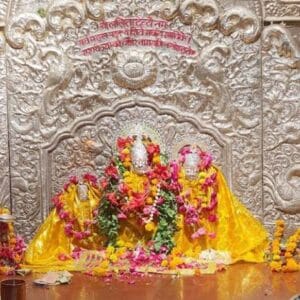
Shri Maa Lalita Devi Mandir in Prayagraj, a revered Shakti Peetha, marks where Sati’s right-hand finger fell. Dedicated to Lalita Devi, a form of Parvati, its architecture is based on the Sri Yantra. It’s a significant pilgrimage site, especially during Navratri and Kumbh Mela.
Location
- Barakhamba, Nai Basti, Unnamed Rd, near Shiv Mandir, Kydganj, Prayagraj, Uttar Pradesh 211003
Full Story
Shri Maa Lalita Devi Mandir in Prayagraj is a highly revered Shakti Peetha, a significant pilgrimage site for devotees of the Divine Mother. Its history is deeply rooted in Hindu mythology and tradition. Here’s a comprehensive overview:
Mythological Origins (Shakti Peetha):
- The Lalita Devi Temple is considered one of the 51 Shakti Peethas scattered across the Indian subcontinent. These are sacred sites where parts of the goddess Sati’s body are believed to have fallen.
- The most common legend associated with the Shakti Peethas is that of Daksha Yagna. King Daksha, Sati’s father, performed a grand yagna (ritual sacrifice) but didn’t invite Shiva, Sati’s husband. Feeling insulted, Sati immolated herself in the sacrificial fire.
- Enraged and grief-stricken, Lord Shiva carried Sati’s body and performed his destructive Tandava dance. To stop the devastation, Lord Vishnu used his Sudarshan Chakra to cut Sati’s body into 51 pieces, which fell at various locations, becoming Shakti Peethas.
- At the Lalita Devi Temple in Prayagraj, it is believed that the right-hand finger of Sati fell.
Lalita Devi as a Deity:
- Lalita Devi is a form of Parvati (Sati’s reincarnation) and is considered one of the ten Mahavidyas (wisdom goddesses). She is the presiding deity of Naimisharanya, another sacred site.
- She is often associated with beauty, grace, and divine play (Lila).
Temple History and Architecture:
- Ancient Origins: The exact founding date of the temple is not definitively known, but its association with the Shakti Peetha tradition makes it very ancient. It is mentioned in ancient texts like the Devi Purana. Maharishi Bharadwaj is also said to have worshipped the Goddess here.
- Sri Yantra Design: The temple’s architecture is based on the Sri Yantra, a complex geometric diagram used in tantric worship. This adds to the temple’s spiritual significance.
- Renovations: The temple has undergone several renovations over the centuries. The last major renovation is said to have been in 1987.
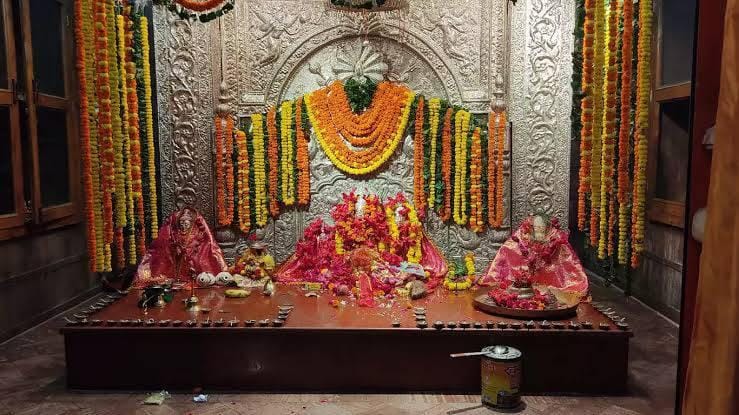
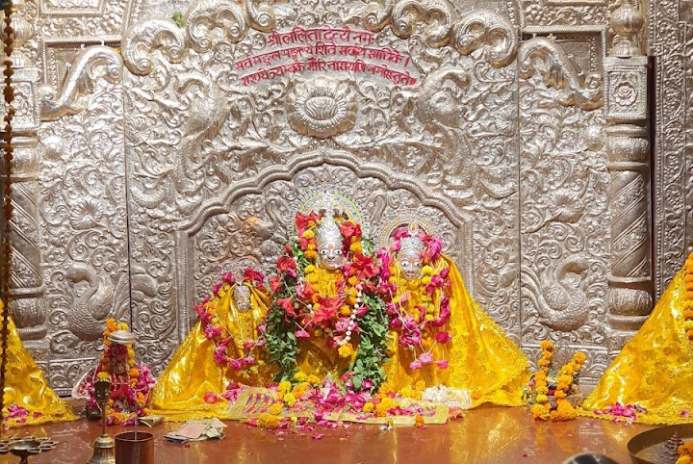
- Three Forms of the Goddess: Within the temple, the presiding deity is worshipped in three forms: Ma Lalita, Maa Saraswati (goddess of knowledge), and Maha Kali (goddess of destruction).
Significance and Practices:
- Completion of Prayagraj’s Shakti Peethas: Lalita Devi Temple, along with Kalyani Devi and Alopi Devi temples, completes the trinity of Shakti Peethas in Prayagraj, making the city an exceptionally important center for Shakti worship.
- Blessings and Fulfillment of Wishes: It is believed that visiting the Lalita Devi Temple after bathing at the Triveni Sangam ensures the fulfillment of all wishes.
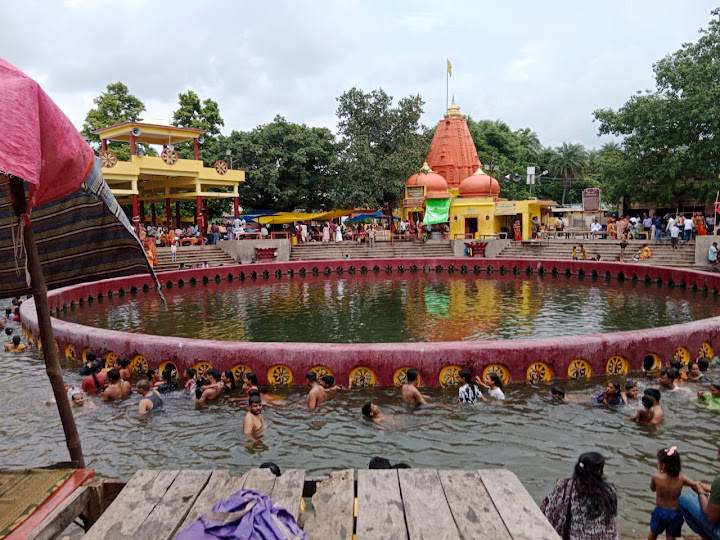
- Navratri and Kumbh Mela: The temple sees a significant influx of devotees during Navratri (nine nights of goddess worship) and the Kumbh Mela, when millions of pilgrims visit Prayagraj. The fifth day of Navratri is particularly dedicated to Lalita Devi.
Location:
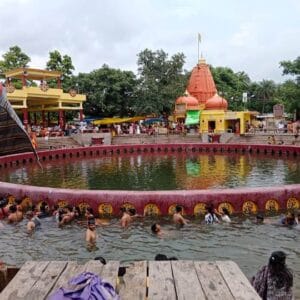
- The temple is located in the Meerapur colony, on the banks of the Yamuna River.
In summary, Shri Maa Lalita Devi Mandir is a highly significant Shakti Peetha with ancient roots, a rich mythological background, and a unique architectural design. It continues to be an important center of pilgrimage for devotees seeking the blessings of the Divine Mother.


Reviews
There are no reviews yet.