
• Home
  • Search
  • Place
  • Article
  • Travel Tips
  • About Us
  • Contacts Us
  • Support Us
  • My account
Wishlist

No products in the wishlist.

Return To Shop

View Wishlist

Wishlist
PlaceApp  BackgroundEraser_20250111_093930385_copy_1094x1093
  • Home
  • Search
  • Place
  • Article
  • Travel Tips
  • About Us
  • Contacts Us
  • Support Us
  • My account

Taj Mahal, Agra: A Monument of Love and Architectural Marvel

February 9, 2025 /Posted by0110pankajg@gmail.com / 262 / 0

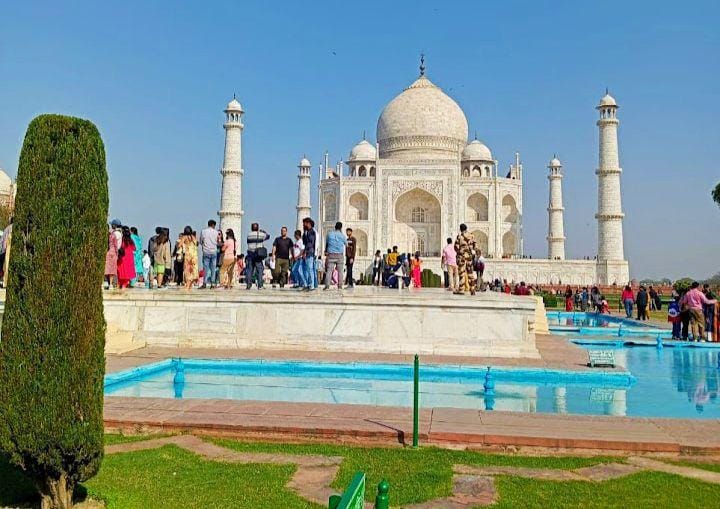
The Taj Mahal, located in Agra, Uttar Pradesh, India, is one of the most iconic and celebrated monuments in the world. It is renowned for its breathtaking beauty, architectural brilliance, and the poignant love story behind its creation. Here’s a detailed overview of its historical and cultural significance:

Visit The Place

Historical Background:

  1. Commissioned by Shah Jahan:
    • The Taj Mahal was built by the Mughal Emperor Shah Jahan (ruled 1628–1658) in memory of his beloved wife, Mumtaz Mahal, who died during childbirth in 1631.
    • Mumtaz Mahal was Shah Jahan’s third wife and his favorite companion. Her death left him heartbroken, and he vowed to build a monument that would immortalize their love.
  2. Construction Period:
    • Construction began in 1632 and was completed in 1653, taking approximately 22 years.
    • The project involved over 20,000 artisans, craftsmen, and laborers from across India, Persia, the Ottoman Empire, and Europe.
  3. Architects and Design:
    • The chief architect is believed to be Ustad Ahmad Lahori, though other architects and designers also contributed.
    • The design combines elements of Persian, Islamic, and Indian architecture, creating a unique Mughal style.

Architectural Marvel:

  1. Materials and Craftsmanship:
    • The Taj Mahal is built primarily of white marble, sourced from Makrana in Rajasthan.
    • Precious and semi-precious stones, such as lapis lazuli, jade, crystal, turquoise, and sapphire, were used for intricate inlay work (pietra dura).
    • The marble reflects different hues depending on the time of day—pinkish in the morning, milky white in the evening, and golden under moonlight.
  2. Layout and Design:
    • The complex is symmetrically designed and includes:
      • Main Mausoleum: The central structure housing the tombs of Mumtaz Mahal and Shah Jahan.
      • Four Minarets: Flanking the mausoleum, each leaning slightly outward to protect the main structure in case of an earthquake.
      • Gardens (Charbagh): Persian-style gardens divided into four quadrants by water channels, symbolizing paradise.
      • Mosque and Guest House: Located on either side of the mausoleum for symmetry.
    • The Yamuna River flows behind the Taj Mahal, adding to its scenic beauty.
  3. Inscriptions and Calligraphy:
    • The walls are adorned with Quranic verses and floral patterns. The calligraphy was created by Amanat Khan, a master calligrapher.

Symbolism and Significance:

  1. A Monument of Love:
    • The Taj Mahal is often called a “teardrop on the cheek of eternity” and is considered the ultimate symbol of love.
    • Shah Jahan’s grief and devotion to Mumtaz Mahal are immortalized in its grandeur.
  2. Cultural and Religious Significance:
    • The Taj Mahal reflects the Mughal Empire’s grandeur and its fusion of Islamic and Indian cultures.
    • It is also a symbol of eternity and paradise, as described in Islamic teachings.
  3. UNESCO World Heritage Site:
    • The Taj Mahal was designated a UNESCO World Heritage Site in 1983 for its outstanding universal value and architectural brilliance.

Historical Events and Legacy:

  1. Shah Jahan’s Imprisonment:
    • After the completion of the Taj Mahal, Shah Jahan was overthrown by his son, Aurangzeb, and imprisoned in the Agra Fort.
    • From his prison, Shah Jahan could view the Taj Mahal, where he was eventually buried beside Mumtaz Mahal after his death in 1666.
  2. British Era and Restoration:
    • During the British colonial period, the Taj Mahal suffered neglect and vandalism. Some precious stones were stripped from its walls.
    • In the 19th century, Lord Curzon, the Viceroy of India, initiated restoration efforts to preserve its beauty.
  3. Modern-Day Conservation:
    • The Taj Mahal faces threats from air pollution, acid rain, and environmental degradation due to industrialization in Agra.
    • The Archaeological Survey of India (ASI) and other organizations are working to protect and conserve the monument.

Visiting the Taj Mahal:

  1. Best Time to Visit:
    • October to March: The weather is pleasant, making it ideal for sightseeing.
    • Sunrise or Sunset: The Taj Mahal’s changing colors during these times are mesmerizing.
  2. Interesting Facts:
    • The Taj Mahal is one of the New Seven Wonders of the World.
    • It attracts over 7–8 million visitors annually.
    • The construction cost is estimated to be around 32 million rupees (equivalent to billions today).

Conclusion:

The Taj Mahal is not just a monument but a testament to love, art, and human ingenuity. Its timeless beauty and historical significance continue to captivate people from around the world, making it a must-visit destination and a proud symbol of India’s rich cultural heritage.
Tags: Architectural, Cultural, Historical, Memorial, Monument, tourist attractions, UNESCO
Share Post
  • Twitter
  • Facebook
  • Pinterest
  • Mail to friend
  • Linkedin
  • Whatsapp
Tulasi Smarak Bhavan, Ayodhya:...
Agra Fort: A Majestic Citadel ...

Related posts

Church
Read more

Basilica of Bom Jesus, Goa – History, Architecture & St. Francis Xavier’s Sacred Relics

October 28, 2025 10
The Basilica of Bom Jesus (Basilica of the Good Jesus), located in Old Goa, India, is one of the most significant and revered historical churches in Asia. It... Continue reading
Pilgrim
Read more

Shree Salasar Balaji Mandir, Rajasthan: History, Significance & Spiritual Guide

October 13, 2025 0
Shree Salasar Balaji Mandir, located in the Churu district of Rajasthan, is one of India’s most sacred temples dedicated to Lord Hanuman (Balaji). The temple holds immense... Continue reading
Pilgrim
Read more

Shri Mehandipur Balaji Temple, Rajasthan: History, Significance & Visiting Guide

October 12, 2025 2
Shri Mehandipur Balaji Temple, located in the Dausa district of Rajasthan, is one of the most mysterious and spiritually powerful temples in India. Dedicated to Lord... Continue reading
Pilgrim
Read more

Shree Shyam Kund (Shyam Sarovar) Khatu, Rajasthan– Ultimate Pilgrimage & Travel Guide

October 10, 2025 6
Shree Shyam Kund, also known as Shyam Sarovar, is a revered and sacred water body located in the holy town of Khatu in the Sikar district of Rajasthan, within... Continue reading
Pilgrim
Read more

Historical History of Shree Khatu Shyam Ji Mandir, Rajasthan: The Legend of Barbarika

October 8, 2025 0
Shree Khatu Shyam Ji Mandir is one of the most revered pilgrimage sites in Rajasthan, India. Deeply rooted in Mahabharata-era legends and rich Rajasthani devotion, it stands... Continue reading

Add comment Cancel reply

Your email address will not be published. Required fields are marked

Archives

  • October 2025
  • September 2025
  • August 2025
  • July 2025
  • June 2025
  • May 2025
  • April 2025
  • March 2025
  • February 2025
  • January 2025

Categories

  • Adventure
  • Ancient Site
  • Archaeological Site
  • Architectural
  • Astrological Significance
  • Astronomical
  • Beach
  • Bridge
  • Capital City
  • Casino 
  • charitable organization
  • Church
  • City
  • Construction
  • Convention Centre
  • Cultural heritage
  • Educational
  • Entertainment
  • Event Venue
  • Fort
  • Gallery
  • Gaming Hub
  • Garden
  • Gurudwara
  • Handicraft
  • Hill Site
  • Historical
  • Hospitality
  • Hotel
  • Indian Arts
  • Institution
  • Lake
  • Library
  • Mall 
  • Market
  • Math/Monastery
  • Memorial
  • Monument
  • Mosque
  • Museum
  • Mythological
  • National Heritage
  • Other Place
  • palace
  • Park
  • Party Spot
  • Pilgrim
  • Place
  • Planetarium
  • Playground
  • Religious
  • Science
  • Spiritual site
  • Sports Complex
  • state
  • Temple
  • Tourist Attractions
  • Town
  • Training School
  • Trending place
  • UNESCO
  • Village
  • Water/River View
  • Waterfall
  • Wild Tour
  • Yoga

Metadata

  • Log in
  • Entries feed
  • Comments feed
  • WordPress.org
Home
Place
Search
Articles
My Account

WIDE RANGE OF PLACES

Trusted By 21,000+ people

WIDE RANGE OF ARTICLES

Popular Place Search

    • Beaches in Goa

    • Adventure in Goa

    • Temple in prayagraj

    • Museum in prayagraj

    • Park in prayagraj

    • Historical Place in Jaipur

    • Park in Kota

    • Temple in Kota

Popular Articles Search

    • kumbh History

    • Bade Hanuman ji mandir History

    • Chandra sekhar park History

    • Tiveni sangam History

    • Prayagraj History

    • Maa ganga History

Quick Links

    • Place Category

    • PlaceApp services

    • About PlaceApp

    • contact us

    • Support Us

    • Travel Tips and Tricks

Sign up to unlock your personalized travel world —and explore amazing Articles

save your favourite places, plan smarter with detailed guides & budget tools, write your own reviews, and access your travel plans anytime on any device.

Sign up

Follow Us

Facebook Twitter Instagram Whatsapp Youtube
  • Home
  • Search
  • Place
  • Article
  • About Us
  • Contact Us
  • Support Us

© 2026 PlaceApp