
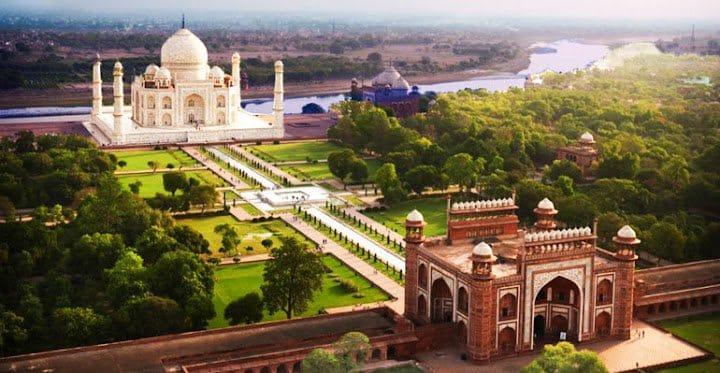
Agra, a historic city on the banks of the Yamuna River in Uttar Pradesh, is world-famous for the Taj Mahal, a UNESCO World Heritage Site and one of the Seven Wonders of the World. Once the capital of the Mughal Empire, Agra flourished with grand forts, palaces, tombs, and gardens that still define its legacy.
Below is a detailed historical history of Agra.
1. Early History of Agra
- The origins of Agra trace back to the Mahabharata era, where it was referred to as Agravana.
- It was part of the Mathura region, mentioned in ancient Hindu scriptures.
- Later, it came under the rule of various dynasties, including the Delhi Sultanate.

2. Agra Under the Delhi Sultans
- In the 11th century, Mahmud of Ghazni and other rulers invaded the region.
- By the late 12th century, Agra came under the control of the Delhi Sultanate.
- Sultan Sikandar Lodi (1488–1517) established Agra as his capital in 1504, giving the city administrative importance.
3. The Mughal Era – Golden Age of Agra
- Babur, the founder of the Mughal dynasty, captured Agra in 1526 after the First Battle of Panipat.
- Humayun and Sher Shah Suri contributed to fortifications and gardens.
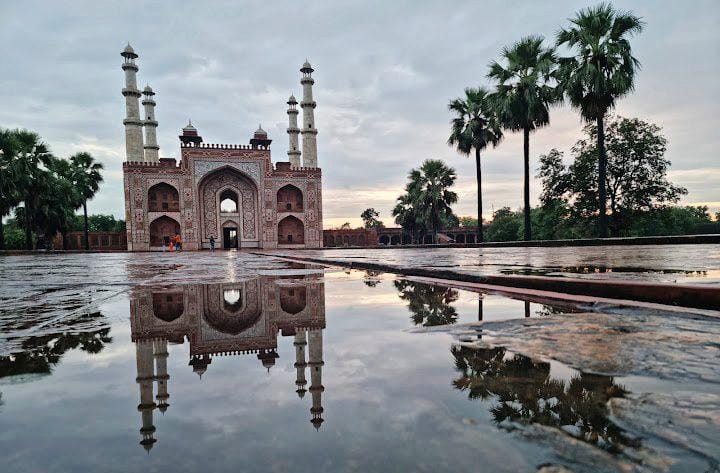
- Akbar the Great (1556–1605) made Agra a grand imperial city. He built the Agra Fort and nearby Fatehpur Sikri, making Agra the heart of Mughal power.
- Jahangir enriched the city with gardens and patronage of art.
- Shah Jahan made Agra world-famous by constructing the Taj Mahal (1631–1648) in memory of his wife Mumtaz Mahal. He also renovated the Agra Fort with marble palaces.
- Agra flourished as the capital of the Mughal Empire until Aurangzeb shifted it to Delhi.
4. Modern Agra
- Today, Agra is part of India’s Golden Triangle tourist circuit (Delhi–Agra–Jaipur).
- Famous for Petha (sweet), leather goods, and marble handicrafts.
- Continues to attract millions of domestic and international tourists annually.
✅ Conclusion
The history of Agra reflects a journey from an ancient Hindu settlement to the epicenter of Mughal grandeur and later a significant British colonial hub. With monuments like the Taj Mahal, Agra Fort, and Fatehpur Sikri, the city remains a treasure of India’s rich cultural and architectural heritage. Today, Agra stands as a symbol of love, power, and timeless artistry.




Add comment